Historical wargames, strategy classics, and modern designs. Board games deserve a broad shelf: the same table can hold a Pacific campaign or a fifteen-minute argument over a route.
Original publisher and later editions are distinguished where a title changed hands. This catalog includes hex-and-counter wargames alongside other board games.
157 entries shown
Historical strategyPre-World War I Europe · Negotiation
Diplomacy
1976 · Avalon Hill (bookcase edition)
Renegade Game Studios edition cover · Cover source
Seven European powers negotiate alliances and submit simultaneous orders, with no dice to rescue a bad promise. The military rules are compact; reading the other players is the real challenge. Avalon Hill's 1976 edition brought Allan B. Calhamer's 1959 design to its familiar bookcase format. Best suited to a group that enjoys bargaining and can take betrayal in the spirit of the game.
Leipzig: The Battle of Nations – Napoleon vs. Europe
1969 · SPI
Published box cover catalogued by BoardGameGeek; edition shown in the artwork · Cover source
Napoleon's 1813 campaign in Germany becomes a contest of concentration, maneuver, and coalition pressure. This is a campaign game rather than just a recreation of the final battle at Leipzig. First issued in SPI's Test Series in 1969 and subsequently revised, it offers an early example of the company's approach to operational Napoleonic warfare.
Published box cover catalogued by BoardGameGeek; edition shown in the artwork · Cover source
A scenario-based treatment of early medieval battle, with infantry, cavalry, command, and the danger of an army losing its nerve. Its appeal is the variety of tactical matchups within one system. Expect the abstractions and spare presentation of early SPI design; this is a historical battle game, despite a title that could easily suggest fantasy.
Published cover shown in the linked game catalogue; edition identified by its artwork · Cover source
Individual aircraft fight for position in First World War dogfights, with speed, altitude, ammunition, and damage tracked alongside movement on the hex map. The attraction is the tactical problem of lining up a shot while staying out of the enemy's sights. Its record keeping and older movement conventions demand more patience than many modern aerial games.
Historical wargameWorld War II · European grand strategy
Rise and Decline of the Third Reich
1974 · Avalon Hill
Published box cover catalogued by BoardGameGeek; edition shown in the artwork · Cover source
The European war is fought through national economies, production, and land, air, and naval campaigns. Choosing where to spend a country's resources matters as much as the next attack. This is the original Avalon Hill game, distinct from Advanced Third Reich and A World at War. A substantial strategic undertaking for players willing to learn its detailed procedures.
Published cover shown in the linked game catalogue; edition identified by its artwork · Cover source
Sailing warships maneuver and exchange broadsides in scenarios ranging from single-ship encounters to fleet actions. Wind, positioning, and the condition of individual vessels give the battles their character. A naval board wargame rather than an RPG, it is an appealing subject for players who want ship handling and gunnery to matter, with the procedural detail of its era.
Science fiction wargameInterstellar conflict · 25th century
StarForce: Alpha Centauri
1974 · SPI
Published box cover catalogued by BoardGameGeek; edition shown in the artwork · Cover source
Interstellar forces maneuver through three-dimensional space using a speculative system of star travel and conflict. Spatial thinking and anticipating enemy movement are central to its identity. Redmond Simonsen's design offers a distinctive alternative to treating space fleets like battleships on a flat ocean; the unusual movement concepts also make the learning curve part of the commitment.
Published box cover catalogued by BoardGameGeek; edition shown in the artwork · Cover source
A broad science-fiction strategy game about expanding and sustaining a civilization across the galaxy. Its focus is empire management and long-range planning rather than the details of a single space battle. The scale gives it an ambitious sweep, while the administration makes it better suited to players who enjoy managing an interstellar empire than those seeking quick fleet combat.
The Campaign for North Africa: The Desert War, 1940–43
1978 · SPI
Published cover shown in the linked game catalogue; edition identified by its artwork · Cover source
Richard Berg's enormous desert campaign joins land and air operations to exceptionally detailed supply and transport requirements. Moving an army is inseparable from keeping it fed, fueled, and equipped. Its scope is remarkable, but so are its demands on table space, organization, and time. This is a project for a committed group, not a casual evening's contest.
A speculative struggle for Antarctic energy resources pits small forces against distance, isolation, and a hostile environment. An optional scenario introduces a subterranean civilization. The unusual setting is its strongest attraction: this imagines a future conflict rather than recreating a historical war. Players interested in logistical problems and unconventional battlefields will find a distinctive premise here.
Published box cover catalogued by BoardGameGeek; edition shown in the artwork · Cover source
Kiev, Rostov, Operation Star, and Korsun present four separate operational battles in the Soviet Union between 1941 and 1944. A shared core system supports different problems of breakthrough, encirclement, and survival. The attraction is variety without learning four unrelated games; these are individual battles, not one linked campaign covering the entire army group's war.
Science fiction wargameSpace opera · Galactic rebellion
Freedom in the Galaxy: The Star Rebellions, 5764 AD
1979 · SPI
Published box cover catalogued by BoardGameGeek; edition shown in the artwork · Cover source
An empire and a rebellion struggle for control through military operations and the missions of individual characters. It combines galactic strategy with the personal adventures that give space opera its appeal. The breadth of the character and campaign systems is the draw, but also the burden: expect considerably more rules and administration than a straightforward fleet battle.
1980 · Avalon Hill edition (original: Jedko Games, 1978)
Published box cover catalogued by BoardGameGeek; edition shown in the artwork · Cover source
The Allied campaign from the invasion of Western Europe to the advance toward Germany demands decisions about landings, reserves, supply, and momentum. John Edwards' campaign design originally appeared through Jedko Games in 1978; this entry identifies Avalon Hill's 1980 edition. Its appeal is the operational sweep of liberation rather than the detail of individual Normandy firefights.
Historical wargameCold War · Modern Pacific naval operations
7th Fleet: Modern Naval Combat in the Far East
1987 · Victory Games
Published box cover catalogued by BoardGameGeek; edition shown in the artwork · Cover source
Joseph M. Balkoski’s Fleet-series game portrays a hypothetical naval war in the Far East. Surface groups, submarines, and air power require careful coordination; the range of scenarios supports both shorter engagements and substantial campaigns.
The naval campaign of 1805 links fleet movement, intelligence, and the possibility of invasion. A campaign-level treatment of sea power, rather than a ship-by-ship recreation of Trafalgar.
The opening campaign in France and Belgium examines mobilization, marching armies, and the cost of pressing an offensive. Operational decisions take precedence over individual trench assaults.
Published cover shown in the linked game catalogue; edition identified by its artwork · Cover source
Government, coalition, insurgent, and warlord factions pursue different goals in Afghanistan. The COIN system makes political control and competing priorities integral to the military problem.
Published cover shown in the linked game catalogue; edition identified by its artwork · Cover source
Three factions contest Finland during the revolutionary crisis of 1917–18. Political organization and the escalation toward civil war distinguish it from a conventional two-army campaign.
Published cover shown in the linked game catalogue; edition identified by its artwork · Cover source
Campaigning in eleventh-century Spain puts provisioning, service obligations, and siege operations alongside battle. The Levy & Campaign system makes assembling and sustaining an army part of the contest.
Published cover shown in the linked game catalogue; edition identified by its artwork · Cover source
Four factions compete through government action, insurgency, and the drug economy. Military operations are one instrument among several, making this a useful introduction to asymmetric political warfare.
Historical wargameWorld War II · Battle of the Bulge
Ardennes '44
GMT Games
Published cover shown in the linked game catalogue; edition identified by its artwork · Cover source
An operational treatment of the German Ardennes offensive. Roads, terrain, reserves, and the pressure to keep an advance moving give the campaign its central decisions.
A solitaire career game commanding an Italian submarine in the Mediterranean. Patrol events, attacks, damage, and crew survival build a campaign around the fortunes of one boat.
Historical wargameInterwar & World War II · Grand strategy
Cataclysm: A Second World War
GMT Games
Published cover shown in the linked game catalogue; edition identified by its artwork · Cover source
A global strategic game beginning before the historical outbreak of World War II. Political instability, diplomacy, and rearmament can create a war with a different timetable and alignment of powers.
Three Allied leaders bargain over wartime conferences while competing for influence over the peace. The central contest is coalition politics, with military progress shaping the negotiations.
Published cover shown in the linked game catalogue; edition identified by its artwork · Cover source
A two-player COIN game about the French-Algerian War. Insurgency, population control, and the political consequences of military action make a battlefield victory only part of the larger struggle.
Historical wargameWorld War II · Pacific infantry tactics
Combat Commander: Pacific
GMT Games
Published cover shown in the linked game catalogue; edition identified by its artwork · Cover source
Card-driven infantry combat moves the Combat Commander system to the Pacific. Orders, terrain, and unexpected battlefield events create uncertainty at the level of small tactical engagements.
Published cover shown in the linked game catalogue; edition identified by its artwork · Cover source
A compact four-faction COIN game covering the struggle against Batista. Government forces, revolutionaries, rival insurgents, and organized crime have different ideas about what winning should mean.
Published cover shown in the linked game catalogue; edition identified by its artwork · Cover source
Animal groups compete for survival as environments change. Action selection and adaptation make it a substantial competitive strategy game with an ecological subject rather than a military setting.
Published cover shown in the linked game catalogue; edition identified by its artwork · Cover source
A card-driven Pacific campaign combines naval, air, and ground operations. Coordinating offensives across a vast theater is the main problem; individual tactical battles are deliberately abstracted.
Published cover shown in the linked game catalogue; edition identified by its artwork · Cover source
Romans and competing Gallic factions struggle over allegiance, resources, and military control. The COIN approach highlights the political fragmentation behind Caesar’s campaigns.
Historical wargameAmerican Civil War · Grand strategy
For the People
GMT Games
Published cover shown in the linked game catalogue; edition identified by its artwork · Cover source
A card-driven Union–Confederate campaign links armies, leaders, politics, and strategic will. It offers the sweep of the Civil War without resolving every battlefield at tactical scale.
Published cover shown in the linked game catalogue; edition identified by its artwork · Cover source
Operational scenarios examine the 1940 campaign in France. Breakthroughs, withdrawals, and the placement of reserves make the contest about campaign timing rather than weapon-by-weapon combat.
Published cover shown in the linked game catalogue; edition identified by its artwork · Cover source
Four factions pursue independence, authority, or revolution in British India. Nonviolent action is part of the COIN system, broadening the catalog beyond campaigns settled mainly through armed force.
Great Battles of Alexander Expanded Deluxe Edition, 2nd Printing · Cover source
Tactical scenarios portray Alexander’s battles through the Great Battles of History system. Leadership, formations, and the differing roles of infantry and cavalry drive the battlefield decisions.
Published cover shown in the linked game catalogue; edition identified by its artwork · Cover source
A tactical collection covering battles associated with Caesar. Command and troop capabilities matter within the Great Battles of History system; this is a battle game rather than a Roman empire-management game.
Published cover shown in the linked game catalogue; edition identified by its artwork · Cover source
Six powers contest the religious and political struggles of the early sixteenth century. Diplomacy, warfare, exploration, and religious debate share the same strategic stage.
Historical wargameWorld War II · Operation Market Garden
Holland '44
GMT Games
Published cover shown in the linked game catalogue; edition identified by its artwork · Cover source
Airborne troops and ground formations fight to connect a chain of bridgeheads. The road corridor and the timing of relief make Market Garden a distinctive operational problem.
Published cover shown in the linked game catalogue; edition identified by its artwork · Cover source
Rival cities and political factions campaign in thirteenth-century Tuscany. Supply, service, and siege warfare put the practical limits of medieval armies at the center of the design.
Published cover shown in the linked game catalogue; edition identified by its artwork · Cover source
British, Patriots, French, and Indian factions pursue overlapping and conflicting aims. The COIN system emphasizes control, support, and alliance pressures alongside military operations.
Published cover shown in the linked game catalogue; edition identified by its artwork · Cover source
Teutonic and Rus forces campaign around the Baltic frontier. Transport, provisions, seasonal limits, and the obligations of individual lords shape what an army can attempt.
Published cover shown in the linked game catalogue; edition identified by its artwork · Cover source
The invasion and early Normandy campaign are handled at operational scale. Beachheads, reinforcement, terrain, and German reserves create a contest over building momentum after the landings.
The 1941 desert campaign turns on movement, supply, and the changing balance of available forces. A theater-specific operational game for examining how far a successful advance can be sustained.
Published cover shown in the linked game catalogue; edition identified by its artwork · Cover source
A card-driven campaign covers the First World War across several fronts. Reinforcement, replacements, operations, and political events compete for the same limited strategic attention.
Published cover shown in the linked game catalogue; edition identified by its artwork · Cover source
Four factions navigate the breakdown of Roman Britain. Raiding, migration, rival British interests, and changing political institutions give this COIN game a different character from a simple conquest campaign.
Published cover shown in the linked game catalogue; edition identified by its artwork · Cover source
Lancastrian and Yorkist leaders raise and sustain forces during the Wars of the Roses. Campaign logistics and political allegiance provide the setting for a contest of rival dynastic claims.
Published cover shown in the linked game catalogue; edition identified by its artwork · Cover source
The Allied Salerno landings and German counterattacks become a compact operational contest. Building a viable beachhead is as important as winning the next local engagement.
Published cover shown in the linked game catalogue; edition identified by its artwork · Cover source
A block game about the campaign that decided control of Japan in 1600. Hidden forces and loyalty cards make concentration and political reliability central to command.
Published cover shown in the linked game catalogue; edition identified by its artwork · Cover source
Explore a hidden map, develop technology, and commit fleets to expansion and war. Economic preparation and uncertainty about enemy forces matter as much as the eventual space battles.
GMT Games original SPQR edition cover · Cover source
Tactical battles pit Republican Roman armies against their ancient opponents. The Great Battles of History system gives command, formation, and troop differences detailed battlefield roles.
Published cover shown in the linked game catalogue; edition identified by its artwork · Cover source
An operational treatment of the German 1942 summer offensive in southern Russia. The campaign asks how much territory can be taken and held with finite forces and increasingly stretched support.
Spaceships maneuver and fight with ship information presented on the counters. Energy management and positioning make this a tactical fleet game rather than a galactic empire simulator.
The Soviet summer offensive in Ukraine becomes an operational contest of breakthroughs and counterattacks. Players must judge where to commit reserves as the front shifts.
Historical wargameRenaissance · European power politics
Virgin Queen
GMT Games
Published cover shown in the linked game catalogue; edition identified by its artwork · Cover source
Six powers compete in the later sixteenth century through war, diplomacy, religion, and overseas expansion. A broad multiplayer design whose political negotiations are part of the game’s substance.
Published cover shown in the linked game catalogue; edition identified by its artwork · Cover source
A card-driven campaign of the American Revolution combines army movement with political control. The struggle extends beyond battlefield victories to maintaining a viable rebellion across the colonies.
Historical wargameEighteenth century · Anglo-French rivalry
Imperial Struggle
GMT Games
Published cover shown in the linked game catalogue; edition identified by its artwork · Cover source
France and Britain compete for overseas trade, European alliances, and prestige across the eighteenth century. Peace turns build the position that players will carry into the game's major wars.
Historical wargameSeven Years' War · North America
Wilderness War
GMT Games
Published cover shown in the linked game catalogue; edition identified by its artwork · Cover source
British and French forces campaign across North America during the French and Indian War. Strategy cards drive raids, alliances with Native nations, fort construction, and larger military operations.
Historical wargameAncients · Third-century Roman Empire
Time of Crisis
GMT Games
Published cover shown in the linked game catalogue; edition identified by its artwork · Cover source
Rival Roman dynasties compete during the third-century crisis through military, senatorial, and popular influence. Deck building connects control of provinces and armies to the actions available on later turns.
Published cover shown in the linked game catalogue; edition identified by its artwork · Cover source
Axis, Western Allied, and Soviet factions conduct the European war at strategic scale. Army movement and combat share an activation system, while economics and diplomacy shape the forces available.
Historical wargameWorld War II, Korea & Vietnam · Infantry command
Fields of Fire
GMT Games
Published cover shown in the linked game catalogue; edition identified by its artwork · Cover source
A solitaire infantry-command system recreates a rifle company's missions in World War II, Korea, and Vietnam. Terrain cards and command resources make communications and orders central to managing the fight.
Athens and Sparta contest the Peloponnesian War through a card-driven block system. Concealed units introduce uncertainty while naval operations, land battles, sieges, and pillaging affect the struggle for prestige.
Alexander's generals vie for legitimacy and territory after his death in this multiplayer card-driven game. Campaigning must be balanced against the political struggle over the royal family and succession; the linked cover is GMT's third edition.
Historical wargameAncients · The struggle for Italy
Sword of Rome
GMT Games
Published cover shown in the linked game catalogue; edition identified by its artwork · Cover source
Rome, the Gauls, Greek cities, and other Italian powers contend for ancient Italy using faction-specific strategy cards. Different abilities and shifting alliances connect military campaigns to political survival.
Published cover shown in the linked game catalogue; edition identified by its artwork · Cover source
A block-based campaign game covers the Great Northern War and the struggle to end Swedish dominance of the Baltic. Provincial control, concealed forces, and several scenarios support campaigns of different lengths.
Competing Mediterranean powers raise armies, establish colonies, and manage political stability from 300 BC onward. Long turns and an unpredictable activation sequence portray the development of empires rather than individual battlefield maneuvers.
Historical wargameWorld War II · North Atlantic naval operations
Atlantic Chase
GMT Games
Published cover shown in the linked game catalogue; edition identified by its artwork · Cover source
British and German task forces hunt, evade, and protect shipping in the North Atlantic. Trajectory lines represent uncertain naval locations, making reconnaissance and interpreting reports part of the operational contest.
Historical wargameWorld War II · Bomber interception
Storm Above the Reich
GMT Games
Published cover shown in the linked game catalogue; edition identified by its artwork · Cover source
Command a German Fw 190 fighter squadron intercepting American B-24 formations in a solitaire campaign. Pilot selection, approach paths, and aircraft equipment affect the risks of penetrating a bomber formation.
Historical wargameNineteenth century · Railway finance
1846: The Race to the Midwest
GMT Games
Published cover shown in the linked game catalogue; edition identified by its artwork · Cover source
Railway investors buy shares and direct companies building routes through the American Midwest. Stock rounds alternate with operating rounds, linking personal wealth to track construction, dividends, and changing locomotive technology.
Historical wargamePolynesia · Exploration and expansion
Conquest of Paradise
GMT Games
GMT Games cover from the linked publisher listing · Cover source
Polynesian peoples explore the Pacific, settle island groups, and develop culture and military strength. Limited resources force choices between canoes, warriors, new discoveries, and improvements to an expanding island network.
Published cover shown in the linked game catalogue; edition identified by its artwork · Cover source
Aquatic animal groups compete to survive as prehistoric habitats change. Action placement drives migration, adaptation, and population growth across a shared ocean map; this is a separate game from the original Dominant Species.
Published cover shown in the linked game catalogue; edition identified by its artwork · Cover source
Commercial enterprises explore and develop space across three eras, progressing from nearby planets to interstellar colonies. Card play supports travel, research, infrastructure, and profitable production, with a complete solitaire option.
Each player manages a team of stock cars rather than a single racer. Card-driven movement can pull several cars along together, while vehicle wear, pit stops, and race events complicate the team's scoring strategy.
Published cover shown in the linked game catalogue; edition identified by its artwork · Cover source
A card-driven geopolitical game portrays counterterrorism and extremist movements after 2001. Asymmetric objectives connect military action to governance and international politics, with a solitaire system for the United States side.
Historical wargameHypothetical modern conflict · Korean Peninsula
Next War: Korea
GMT Games
Published cover shown in the linked game catalogue; edition identified by its artwork · Cover source
This hypothetical modern Korean conflict combines land operations with air power and possible foreign intervention. Standard and advanced systems offer different levels of detail; the depicted war is a scenario, rather than a historical event.
Historical wargameHypothetical modern conflict · Taiwan Strait
Next War: Taiwan
GMT Games
Published cover shown in the linked game catalogue; edition identified by its artwork · Cover source
A hypothetical conflict around Taiwan emphasizes amphibious operations, naval threats, and control of the air. Its advanced system expands operational decisions, and it can link with Next War: Korea for a wider fictional campaign.
Historical wargameHypothetical modern conflict · South Asia
Next War: India-Pakistan
GMT Games
Published cover shown in the linked game catalogue; edition identified by its artwork · Cover source
A hypothetical India-Pakistan campaign focuses on Kashmir and the neighboring frontier. Terrain, bridges, outside intervention, and the possibility of nuclear escalation influence the operational problem; it portrays an imagined war.
Divisions and regiments fight the German offensives and Allied counteroffensives around the Marne in 1918. Three-day turns gain additional movement and combat sequences during offensives, reflecting alternating surges and pauses in the campaign.
GMT Games cover from the linked publisher listing · Cover source
Corps-level forces contest the final campaigning year of World War I on the Western Front. Alongside the historical 1918 struggle, a hypothetical Plan 1919 campaign explores an Allied assault against a stronger German defensive posture.
Published cover shown in the linked game catalogue; edition identified by its artwork · Cover source
Five Napoleonic battles are presented in a shared battle system, including Austerlitz and Aspern-Essling. Players maneuver formations and resolve combat in scenarios built around each battle's situation.
Historical wargameWorld War II · European grand strategy
Triumph and Tragedy
GMT Games
Published cover shown in the linked game catalogue; edition identified by its artwork · Cover source
Three blocs pursue European supremacy between 1935 and 1945 through diplomacy, industry, technology, and military expansion. Concealed block armies encourage uncertainty, and economic or technological success can offer a route to victory alongside conquest.
The Union and Confederacy contest the entire war through seasonal turns and repeated action phases. Armies, leadership, rail movement, forts, blockades, and naval operations make maneuver and sustaining a national strategy more important than recreating individual battles.
Historical wargameAge of Sail · Tactical fleet combat
Flying Colors Deluxe
GMT Games
GMT Games Deluxe fourth printing cover · Cover source
Individually rated sailing warships fight actions from the Seven Years’ War through the Napoleonic era. Initiative and command rules keep fleets maneuvering without plotted movement, while wind, broadsides, raking fire, boarding, and damage preserve the character of Age of Sail combat; this entry identifies the expanded Deluxe fourth printing.
The Commune and the Versailles government struggle across political and military spaces during the two turbulent months of 1871. A compact card-driven system makes influence, objectives, momentum, and the final crisis compete for the same limited attention; the linked cover is the corrected second printing.
Three games from Richard H. Berg’s medieval battle series—Men of Iron, Infidel, and Blood & Roses—share a continuous-play tactical system. The collection ranges from early fourteenth-century combined arms through Crusader cavalry warfare and the heavily armored battles of the Wars of the Roses; this entry identifies GMT’s corrected second printing.
Individual Union and Confederate warships maneuver and exchange fire in tactical Civil War naval engagements. Ship and fort cards track the vessels while action and order cards help govern command, gunnery, damage, and the uncertainty of close ship-to-ship fighting.
France and Britain contest North America through army maneuver, diplomacy with Indigenous nations, raids, sieges, construction, naval operations, and battle. Historically based cards drive actions without conventional hand management, and scenarios range from a single campaigning year to the full war; this entry identifies the second printing.
Historical wargameNineteenth-century Central Asia · Great Game
Pax Pamir: Second Edition
2019 · Wehrlegig Games
Second edition · Official box cover · Cover source
Players build shifting coalitions, influence Afghan power brokers, and compete for dominance amid rival imperial ambitions. Victory requires reading the changing political balance rather than simply controlling territory.
Four connected historical counterinsurgency games examine the final decades of British imperial rule. Each emphasizes the political and military pressures facing governments and insurgent movements.
Concealed-strength blocks recreate the uncertainty of the Western Front, while economies, air reconnaissance, naval warfare and technology choices influence the campaign. Scenarios permit both historical and alternate deployments.
Napoleon's Triumph: The Battle of Austerlitz, 2 December 1805
2007 · Simmons Games
Simmons Games edition (2007) box cover · Cover source
This treatment of Austerlitz emphasizes battlefield positions, deception and maneuver as Napoleon confronts the Allied armies. The area-based map and hidden information reward reading enemy intentions.
Historical wargameWorld War II · Pacific and East Asia, 1936–1945
Conquest and Consequence
2021 · GMT Games
Published box cover (GMT Games catalog) · Cover source
Japan, the Soviet and Chinese Communist bloc, and the United States-led coalition compete across East Asia and the Pacific. Diplomacy, economic development, hidden blocks and military operations create a three-sided strategic contest beginning in 1936.
A battalion-level treatment of the Ardennes offensive models divisional organization, command ranges and specialized combat units across the full Battle of the Bulge. Scenarios let players approach the large campaign in smaller sections.
Players plan and conduct the 1942 carrier-launched strike against Japan, balancing operational preparation, the bombing mission and the crews' difficult escape toward China. The design supports solitaire or team play.
The full German-Soviet war is presented at operational scale from Barbarossa to Berlin. A chit-pull activation system creates uncertainty while shorter scenarios cover major campaigns including Case Blue, Kursk and the destruction of Army Group Center.
The Normandy campaign runs from the D-Day landings through the closing of the Falaise pocket. Chit-pull activations, weather, Allied air and naval support, and German reactions shape a compact operational campaign.
Rival great powers pursue colonial possessions, trade and prestige across the world. Diplomacy and overseas expansion share the stage with military intervention, while escalating confrontations threaten to bring on a general European war.
Small spacecraft fight on a hex grid using vector movement: momentum carries a ship onward until thrust changes its course. Pilots must plan maneuvers and weapon fire around where opposing ships are heading. This is GDW’s standalone Traveller board game.
Imperial and Zhodani forces contest the Spinward Marches through fleet operations, planetary assaults and reinforcements. Orders must anticipate the delays of interstellar travel and communication, making the timing of distant campaigns as important as local strength. This is the original standalone GDW board game.
The expanding Terran state confronts an established interstellar empire in a two-player strategic contest. Fleet construction, movement between star systems and planetary conquest connect individual battles to a continuing struggle for territory. This listing covers GDW’s original game.
Historical wargameWorld War II · Tunisia, February 1943
Kasserine Pass: The Baptism of Fire (Second Edition)
1977 · Conflict Games
Second edition (1977) · Box photograph · Cover source
Axis forces attack through central Tunisia as Allied defenders try to contain the breakthrough. Movement through difficult terrain and the placement of reserves shape the struggle for the passes and road junctions. This listing is specifically the 1977 second edition of John Hill’s Conflict Games design.
Historical wargameWorld War II · North Africa, 1940–1942
The Dark Sands
2018 · GMT Games
Published box cover (GMT Games catalog) · Cover source
The North African campaign runs from Operation Compass through El Alamein as British Commonwealth and Axis forces maneuver across a broad desert front. Chit-pull activations create uncertainty while allowing the tempo of retreats, pursuits and counteroffensives to emerge.
A solitaire player commands an RAF squadron intercepting German daylight raids over southeast England in 1940. Individual aircraft, card-assisted dogfights and persistent pilot rosters support single patrols or longer squadron campaigns.
Platoon- and company-level actions after the Normandy landings are driven by initiative and an action-reaction cycle. Simultaneous maneuver, fire and enemy response emphasize small-unit behavior rather than a conventional sequence of isolated moves.
Historical strategy gamePost–World War I · Paris Peace Conference
Versailles 1919
2020 · GMT Games
Published box cover (GMT Games catalog) · Cover source
The leaders of France, Britain, the United States and Italy bargain over the issues that will shape the postwar settlement. Influence, domestic expectations, demobilization and regional unrest force each delegation to balance national aims against a workable treaty.
Caesar campaigns for wealth and prestige while the Gallic player directs independent tribes resisting Roman conquest. Cards drive army movement, political control, uprisings and invasions during the decisive years of the Gallic Wars.
Historical strategy gameAncients · Peloponnesian War, 460–400 BCE
Pericles: The Peloponnesian Wars 460–400 BC
2017 · GMT Games
Published box cover (GMT Games catalog) · Cover source
Athens and Sparta pursue political leadership within their own leagues while directing the wider Peloponnesian conflict. Debate, factional standing, military expeditions and alliance prestige connect domestic rivalry to the conduct of war for two or four players.
Native nations resist expanding settlement, cavalry operations, wagon routes and construction of the transcontinental railroad across the Great Plains. Random faction order, regional control and card play create a compact contest for one to four players.
A solitaire president manages domestic policy, Congress, public opinion, diplomacy and crises across a four-year term. Interlocking action systems and unpredictable world events make governing priorities compete for limited time and political capital; this listing is the second edition.
Historical strategy gameCold War · Philippines, 1981–1986
People Power: Insurgency in the Philippines, 1981–1986
2023 · GMT Games
Published box cover (GMT Games catalog) · Cover source
Government forces, the New People's Army and nonviolent Reformers pursue different paths through the final years of Ferdinand Marcos's rule. Elections, personalities, resistance and popular opposition adapt the COIN system to a three-faction political struggle.
Historical politicians compete for party leadership, parliamentary influence and the premiership during Queen Victoria's reign. Debating bills, calling elections, winning royal favor and recruiting prominent supporters shape a partly cooperative contest for one to four players.
France and the Allied powers bargain over political issues while directing the campaigns that will decide Napoleon's fate. Diplomacy, government priorities and military operations are linked in a card-driven design for one to four players.
Published box cover (GMT Games catalog) · Cover source
The Ptolemaic, Seleucid and Macedonian dynasties compete for legitimacy and influence as Rome and other powers reshape the eastern Mediterranean. Court politics, leaders, warfare and shifting regional agendas drive the struggle among three Hellenistic kingdoms.
The Delhi Sultanate, Bahmani Kingdom and Vijayanagara Empire contest the Deccan while Mongol incursions threaten the north. Asymmetric commands, decrees, alliances and building projects portray a century of rebellion and state formation for one to three players.
Historical strategy gameInterwar Europe · Czechoslovakia and the Munich Crisis, 1938
The Bell of Treason: 1938 Munich Crisis in Czechoslovakia
2025 · GMT Games
Published box cover (GMT Games catalog) · Cover source
Two sides contest whether Czechoslovakia should defend its independence or concede the Sudetenland during the 1938 crisis. Cards and influence model domestic resolve, alliance pressure, mobilization and Hitler's escalating demands in a compact political struggle.
Historical wargameSecond Sino-Japanese War · China, 1937–1941
China's War: 1937–1941
2025 · GMT Games
Published box cover (GMT Games catalog) · Cover source
Japan, the Guomindang government, Chinese Communists and regional warlords pursue competing military and political aims during the opening years of the Second Sino-Japanese War. The COIN system links territorial control, population support, resources and faction-specific victory conditions.
China and the United States compete through diplomacy, economics, regional influence and calibrated military pressure in the disputed South China Sea. Card play forces both sides to advance their claims while preventing tension from escalating beyond control.
Historical wargameMedieval · Anatolia and the Manzikert campaigns, 1068–1071
Seljuk: Byzantium Besieged, 1068–1071
2025 · GMT Games
GMT Games published box cover (2025) · Cover source
Eastern Roman and Seljuk forces campaign across Anatolia before Manzikert. Medieval logistics, mounted raids, stronghold defenses and uncertain allied loyalties shape asymmetric objectives in the fifth Levy & Campaign volume.
Historical wargameMedieval · Norman and successor battles, 1053–1265
Norman Conquests: Men of Iron Volume V
2023 · GMT Games
GMT Games published box cover (2023) · Cover source
Seven tactical battles trace the Normans and their successors from Civitate to Evesham, including Fulford, Stamford Bridge and Hastings. Ralph Shelton's Men of Iron volume uses hex maps and counters to examine individual engagements rather than a continuous campaign.
Battalion-level formations contest the approaches to Kasserine in Dean Essig's second Battalion Combat Series game. A ten-turn campaign and shorter scenarios emphasize maneuver, command disruption and an Axis objective revealed during play. This is MMP's game, not Conflict Games' Kasserine Pass.
Allied and Axis players direct armies and corps through the Western European campaign. Strategy cards divide attention among operations, events, replacements and redeployment, while invasion choices and supply shape the advance. Michael Rinella's design includes a full campaign and a shorter Overlord scenario.
Steve Jackson Games Sixth Edition Core Set cover · Cover source
Armed cars duel in an arena using prebuilt vehicles, dashboards, cards and large-scale miniatures. Players select maneuvers, manage speed and damage, and combine weapons with driving choices in the faster-playing sixth edition of Steve Jackson Games' automotive combat system.
Historical wargameAlternate Cold War · Fulda Gap, 1985
World At War 85: Storming the Gap
Lock 'n Load Publishing
First Strike Ultimate Pack published box cover · Cover source
NATO and Warsaw Pact formations fight a hypothetical 1985 campaign in West Germany. Platoon-level counters, formation cards and opposed combat rolls keep both players involved as mechanized forces contest the Fulda Gap across linked scenarios.
Historical wargameWorld War II · Stalingrad strongpoint defense
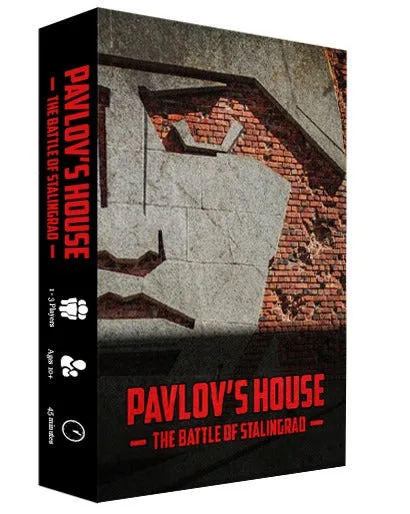
Pavlov’s House: Second Edition
2019 · Dan Verssen Games
Dan Verssen Games second-edition box cover · Cover source
Players coordinate the Soviet defenders of Pavlov’s House with the wider 62nd Army effort while German forces press repeated attacks during the Battle of Stalingrad. Tactical defense inside the strongpoint connects to operational support, supplies and the approaching enemy assault deck.
Historical wargameModern · Close air support, 1980s to present
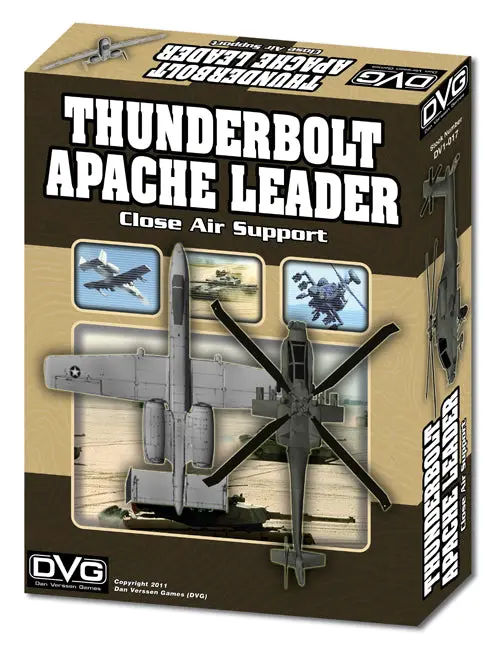
Thunderbolt Apache Leader
Dan Verssen Games
Dan Verssen Games published box cover · Cover source
A solitaire campaign game puts the player in command of United States close-air-support pilots and aircraft. Squadron planning, pilot stress, weapons allocation and tactical missions against armor, air defenses and other battlefield targets connect eight campaigns with variable operational situations.
Historical wargameWorld War II · Eastern Front, Operation Barbarossa 1941
Conflict of Heroes: Awakening the Bear! Third Edition
2019 · Academy Games
Academy Games third-edition box cover · Cover source
Squad- and vehicle-level forces fight the opening battles of Operation Barbarossa on geomorphic maps. The third edition uses an action-point system, firefight scenarios and revised living rules to model the changing initiative and short, violent engagements of tactical combat.
Historical wargameEarly United States · First Barbary War, 1801–1805
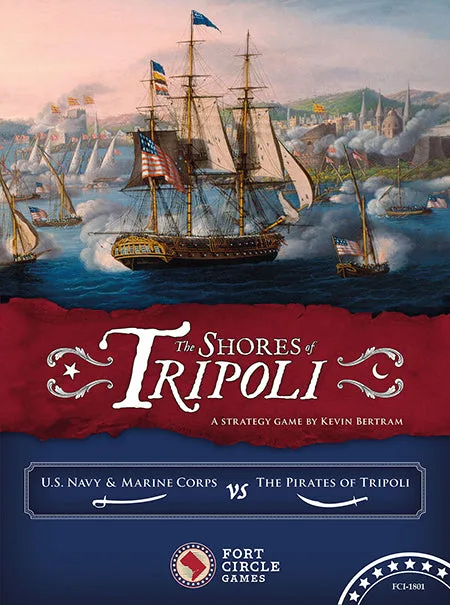
The Shores of Tripoli
2020 · Fort Circle Games
Fort Circle Games published box cover · Cover source
Two players direct the United States and Tripolitania through the First Barbary War. Card-driven events connect naval movement, piracy, diplomacy, land operations and battles in a low-complexity design that also includes solitaire rules.
Science-fiction tactical gameFar future · Rival factions on Callisto, 2200
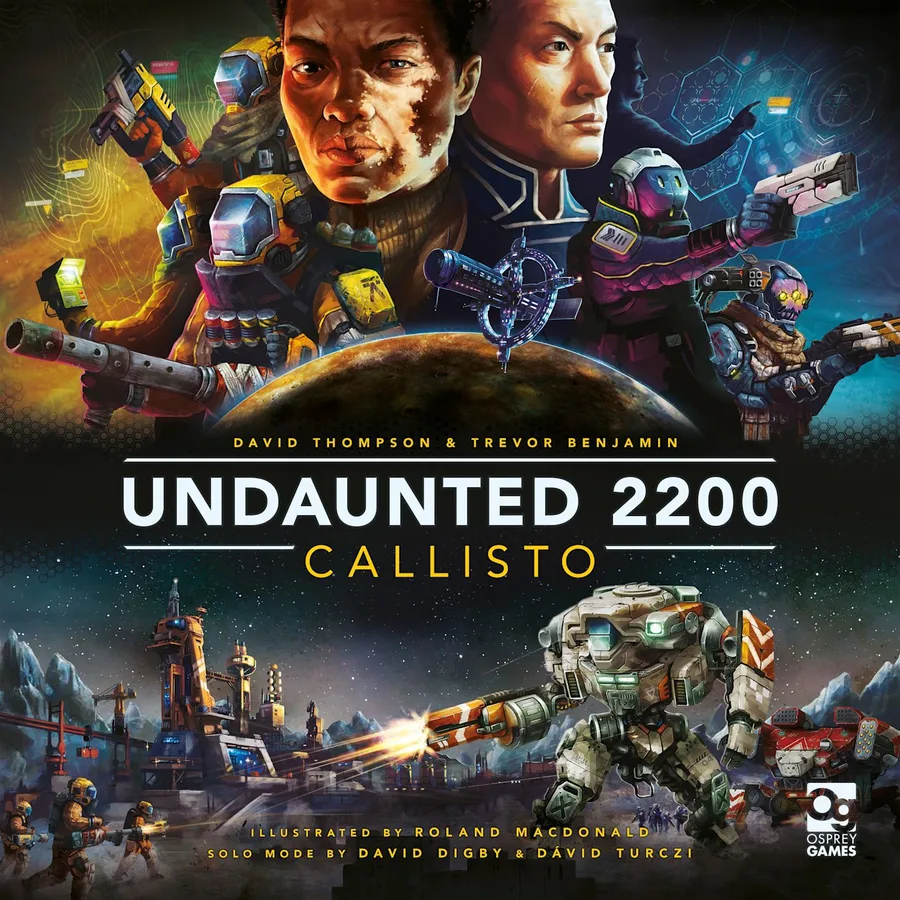
Undaunted 2200: Callisto
2024 · Osprey Games
Osprey Games first-edition box cover (2024) · Cover source
Corporate security forces and a mining collective fight for control of Callisto's resources with infantry, industrial vehicles and reawakened mechs. This standalone Undaunted design adapts deck-building and battlefield control to science fiction, with linked scenarios and solo, two-player and four-player modes.
Historical political gameAntebellum United States · Political struggle over slavery
This Guilty Land
2018 · Hollandspiele
Hollandspiele published box cover (2018) · Cover source
Justice and Oppression contend over slavery in the decades before the American Civil War. A face-up card display, political capital and a shared sequence of actions make each side's choices shape the other's opportunities in a two-player design that also supports playing both sides solitaire.
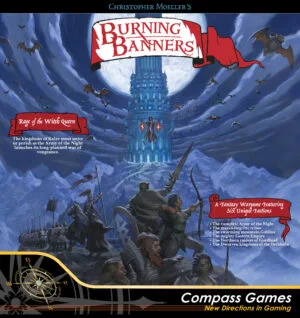
Six rival kingdoms fight across four linked maps in scenarios ranging from evening battles to decade-long campaigns. The basic game emphasizes movement, terrain, recruitment and alliances, while the advanced rules add heroes, monsters, magic and powerful artifacts.
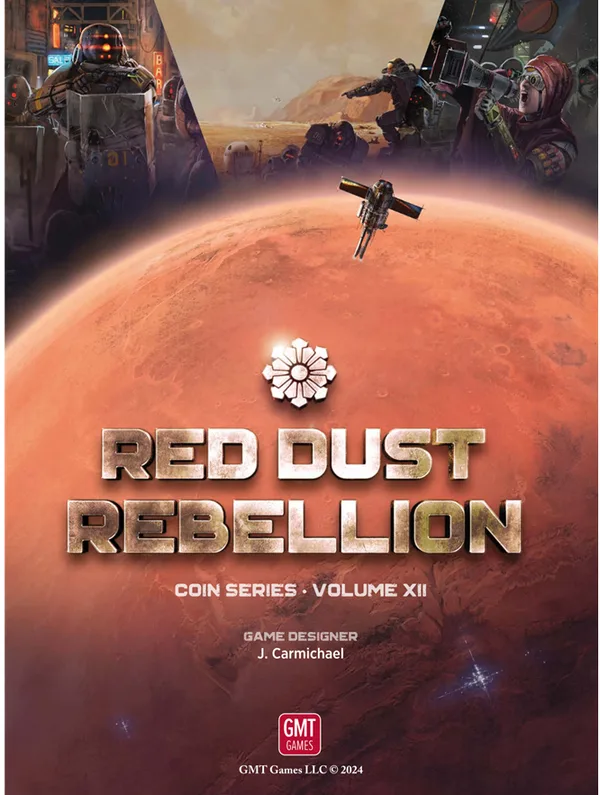
Science-fiction political wargameNear future · Political and military struggle on Mars
Red Dust Rebellion
2024 · GMT Games
GMT Games first-edition box cover (2024) · Cover source
Four factions contest the future of a settled Mars through political organization, protest, security operations and armed revolt. The twelfth COIN Series design adapts asymmetric action selection, shifting support and non-player systems to a science-fiction conflict over Martian independence and corporate rule.
Science-fiction family gameStar Trek · Planetary mission race
The Star Trek Game
1967 · Ideal Toy Corporation
Original Ideal Toy Corporation box cover (1967) · Cover source
Players leave Earth, visit the three planets assigned by a mission card and race home. Numbered fuel cards control orthogonal movement across the grid, while planetary stops and movable fuel ships replenish spent cards. This licensed family game was the first published Star Trek board game and the only one released while the original television series was still in production; it is a race game rather than a tactical starship simulation.
Two forces of BattleMechs maneuver across mapped terrain, manage heat and weapon ranges, and trade damage across armor locations and internal systems. This 40th Anniversary boxed edition combines eight assembled miniatures with maps, record sheets, rules and introductory setting material for the contemporary tabletop game.
Horror exploration gameModern horror · Haunted-house exploration and betrayal
Betrayal at House on the Hill (Third Edition)
2022 · Avalon Hill / Hasbro
Avalon Hill Third Edition official product image (2022) · Cover source
Explorers reveal a different haunted mansion room by room, gathering items and surviving ominous events until a haunt transforms the cooperative exploration into one of fifty scenarios. The third edition uses scenario cards, revised rules and new characters to determine how the traitor, heroes and house interact.
Political card-driven gameAmerican Civil War · Secession crisis, 1860–1861
Fort Sumter: The Secession Crisis, 1860–61
2018 · GMT Games
GMT Games first-edition box cover (2018) · Cover source
Unionist and Secessionist players contest political capital across the armaments, secession, public-opinion and political dimensions of the crisis that preceded the American Civil War. Three compact rounds of card-driven area control culminate in a Final Crisis, where cards reserved during play determine the last political confrontation.
Political-economic strategy gameContemporary politics and economics · Fictional modern nation
Hegemony: Lead Your Class to Victory
2023 · Hegemonic Project Games
Hegemonic Project Games published box image (2023) · Cover source
Players guide the working, middle or capitalist class, or the state itself, through an asymmetric simulation of a modern nation. Companies, wages, taxation, trade, public services, strikes, unions and proposed policies link each class's economic choices to the shifting political balance.
Negotiation and historical simulationBritish Empire · East India Company, eighteenth and nineteenth centuries
John Company: Second Edition
2022 · Wehrlegig Games
Wehrlegig Games Second Edition published box image (2022) · Cover source
Players occupy offices within the British East India Company and collectively steer its sprawling bureaucracy while pursuing their own family fortunes. Trade, military expeditions, appointments, patronage and political consequences make cooperation necessary even as each family competes to benefit from the Company's rise or decline.
Historical strategyBritain, AD 43–1085 · Invasions and migrations
Britannia
1986 · H. P. Gibsons (original edition)
Avalon Hill edition box cover (1987) · Cover source
Several peoples rise, migrate, fight, and decline across sixteen turns spanning the Roman invasion through the Norman Conquest. Each player controls multiple nations with different periods of strength and historical scoring opportunities, so success depends on balancing immediate survival against points that may not become available for centuries.
Exploration, colonies, industry, research, and fleets form one strategic contest. The early Metagaming game rewards long-range planning and an interest in the economy behind a war; bookkeeping and a gradual buildup require patience. Initial publication is variously dated 1974 or 1975.
One cybernetic tank advances against an army defending a command post. Target selection and sacrifice give both sides distinctive problems. This review focuses on the original compact game, rather than the contents of later editions.
Strength, Dexterity, equipment, and positioning create meaningful choices in a compact game of individual combat. Reviewed together with Wizard, its compatible magical companion and a foundation of The Fantasy Trip.
Intelligence and magic expand the physical contest established in Melee. Character construction and spell resources give the duels their interest. Reviewed alongside Melee, with the later role-playing framework distinguished from these original combat games.
Task Force Games original Starfire cover (1979) · Cover source
Ships are represented by compact rows of system letters, tying construction and damage tracking to fleet combat. The original tactical game is an appealing design study; later strategic expansions and editions need separate assessments.
Science fiction wargameTactical starship combat · Star Fleet Universe
Star Fleet Battles
1979 · Task Force Games / Amarillo Design Bureau
Task Force Games early pocket-game cover · Cover source
Command individual starships, squadrons, or fleets through detailed energy allocation, impulse movement, shield management, weapons fire, and damage to specific systems. The 1979 pocket game grew into an extensive tactical system and a distinct Star Fleet Universe based on the original Star Trek television era under license.
Science fiction wargamePlanetary invasion and ground warfare
Cerberus: The Proxima Centauri Campaign
1979 · Task Force Games
Published box cover catalogued by BoardGameGeek; edition shown in the artwork · Cover source
Human and Cetian forces contest an alien planet, with special forces disrupting military infrastructure. Its ambitious setting deserves attention, alongside published criticism of slow movement and limited strategic opportunities.