Publication year identifies the listed edition or first release. A later edition appears separately when it marks a substantial new version.
The 1950s are part of the story. Jack Scruby’s War Games Digest began in 1957 and helped commercial miniature gaming take shape. We are researching individual rules from that decade before assigning catalog entries to them. Read the HMGS history ↗
99 entries shown
LandAncient, medieval, legendary and fantasy warfare
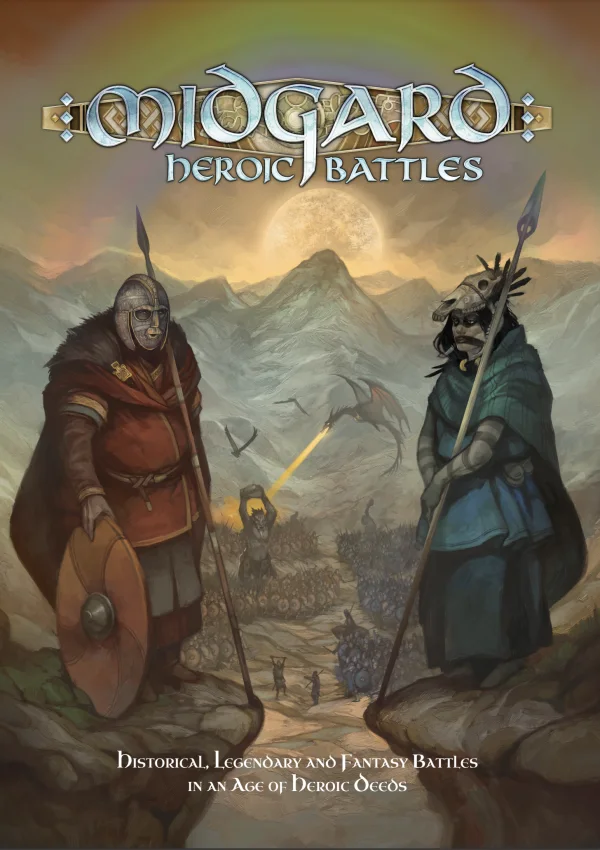
Midgard Heroic Battles
2024 · Reisswitz Press / TooFatLardies · First edition
Heroes and warrior bands fight battles inspired by history, legend and fantasy, from Troy and Hastings to Arthurian and Norse settings. Reputation rewards heroic deeds and reverses, while scale-agnostic forces, sorcery, flying creatures, scenarios and force-building rules support varied collections.
Version 4.1 rulebook cover · Image supplied by Gene
Individual-soldier WWII rules for squad and platoon actions. Suppressive fire, spotting, defensive fire, and separate training and experience ratings shape the infantry fight. Documentation-based Battleward review examines the publisher sample.
Company- to battalion-level combined-arms rules with platoon infantry bases, armor, artillery, reconnaissance, and support. An optional campaign links tabletop outcomes to map operations. Review based on publisher documentation.
English version 1.7 · September 2015 · Cover source
Supplement to the original Impetus rules: amendments, clarifications, competition procedures, ambushes, advanced deployment, and flank marches. Requires the original base rules; it is not standalone or current Impetus Second Edition errata.
Grand-tactical WWII rules with company units grouped into formations. Command-point spending, coordinated activations, and enemy response actions make leadership and combined arms central. Review examines the publisher sample.
Naval miniature rules for small to medium fleet actions. Mandatory wind-dependent sailing precedes alternating ship activations; crew checks determine available orders. Review examines the publisher sample and broad historical coverage.
Company-level combined-arms battles with individual vehicles and alternating platoon activation. Optional Drop-In modules add infantry, artillery, engineering and air support; the rules support micro armor through 15mm figures.
Naval miniature rules covering surface gunnery, torpedoes, radar, damage control, aircraft and submarines. Campaign tools include weather, logistics, shore bombardment and amphibious operations, with streamlined alternatives for air and submarine combat.
Battalion- and regimental-level rules for conflicts including the English Civil War, Seven Years War, Napoleonic Wars and American Civil War. Morale, disorder and ammunition shape unit effectiveness; optional modules cover command, cavalry, skirmishing, artillery and fortifications.
Core Rules, published edition shown · Cover source
Zombie-survival miniature scenarios in which players guide survivors toward safety while fighting the undead. ODGW provides a dedicated rules forum and product-download support alongside its historical miniature systems.
Dave Brown’s second edition puts battalions within brigade commands, using ADC taskings and limited personal interventions to make divisional and corps command a matter of priorities.
Cover (source image courtesy of ebay user crimsonpermanentassurance) · Cover source
A detailed early approach to WWII armor and infantry with HO and micro armor; one of the small-publisher titles that helped define historical miniature gaming.
Flexible warbands, monsters, and magic bring fantasy battles to the Rampant family of rules. Unit profiles support an assortment of miniature collections without requiring one proprietary setting.
A setting-independent large-skirmish system supports science fiction, weird war, and post-apocalyptic forces. Its unit options make it useful for assembling armies from an existing collection of figures.
Small-unit actions cover North American warfare from colonial conflicts to the Civil War. Officer development and flexible company forces provide a framework for linked skirmish campaigns.
Large skirmishes cover nineteenth-century colonial conflicts, with leadership and troop behavior shaping activation. The subject suits scenario-driven games with different force types and uneven battlefield situations.
Companies of infantry and cavalry fight raids and skirmishes in the pike-and-shot era. An officer’s campaign career adds continuity between games without turning every action into a full army battle.
A set of eighteenth-century battle rules centered on the Seven Years’ War. Command, movement, firing, and morale provide a framework for fighting historical engagements with formed armies.
Small groups of warriors fight in feudal Japan, with individual combat choices giving encounters their character. A skirmish option for samurai, soldiers, and other fighters rather than massed armies.
Individual fighters trade shots and sword blows in swashbuckling encounters. The rules emphasize small groups and dueling decisions, making them suitable for adventure-style scenarios.
Fleet battles in the age of sail emphasize maneuver and the collective fighting ability of squadrons. A naval miniature system for larger actions rather than an exhaustive record of each sailor and gun.
Corporations deploy fleets to complete contracts in interstellar space. The first-edition rules link combat to the cost of committing ships, so winning a firefight is not automatically a profitable decision.
Wizards and their hired warbands explore a ruined magical city. Treasure hunting, spells, and campaign development connect small encounters, with survival and advancement providing reasons to return.
A captain and first mate lead a small crew through dangerous salvage and mission encounters. Campaign advancement and flexible character choices suit collections drawn from several science-fiction miniature ranges.
Small Napoleonic-era teams encounter monsters and supernatural threats. Historical uniforms supply the setting, but the premise is horror adventure rather than a simulation of conventional brigade warfare.
Armed vehicles race and fight through a ruined future. Movement templates and vehicle customization make converted toy cars central to the hobby appeal, with collisions and hazardous maneuvers shaping play.
Fantasy armies fight within a framework of kingdom building and campaign warfare. Different peoples can be combined within a kingdom, encouraging armies assembled around a setting rather than a single faction aesthetic.
Scavenger crews venture into an anomalous exclusion zone for salvage. Hostile encounters and campaign development support small forces and terrain-heavy games with a survival-horror atmosphere.
Small teams conduct modern covert missions where stealth and alarms affect the action. The rules offer a different battlefield problem from a straightforward meeting engagement between visible forces.
Modern engagements emphasize troop quality, reaction, and mission objectives. The Ambush Alley/Osprey system covers conventional and asymmetric situations, making scenario context important to the balance of a game.
Element-based armies fight in post-Roman Britain, with leadership resources influencing battlefield performance. A compact route into the era’s shieldwalls, mounted troops, and rival war leaders.
Small groups reenact martial-arts and action-film encounters with gunplay, stunts, and extraordinary fighters. This is a cinematic skirmish game, with narrative possibilities taking priority over military realism.
Small forces fight across a magical version of the Great War, where changed coastlines and awakened powers alter the battlefield. Campaign play mixes military equipment with supernatural threats.
Animal warriors form small warbands in the troubled kingdom of Northymbra. Individual equipment, spells, and developing characters make the campaign as important as a single skirmish.
Rival fantasy gangs compete for power in the streets of Ordinsport. Playing cards and bribery add uncertainty to small encounters between criminals and enforcers.
Survivor groups search for supplies while hostile humans and zombies threaten their plans. A campaign tracks the group between encounters, making losses and scarce resources matter.
Posses clash in an alternate American West under supernatural rule. Gunfights, occult factions, and campaign development combine familiar frontier weapons with monsters and magic.
Small-scale infantry, vehicles, aircraft, and walking machines fight combined-arms battles. The rules use flexible force construction so players can field models from different miniature ranges.
Players build small crews with individual traits and equipment rather than large armies. Missions and an activation system support clashes between bounty hunters, pirates, traders, and other spacefaring characters.
Street operatives fight for money and influence in a cyberpunk city. Hacking and technological upgrades add another layer to missions fought by small, customized crews.
Each player commands one or more tanks in small World War II engagements. Command dice limit the actions available to a crew, so acquiring a target and completing the shot depend on more than a weapon rating.
Small bands fight encounters in the Crusader states. A campaign develops individual fighters and follows the fortunes of a force through the hazards of medieval warfare.
Investigators confront supernatural threats through linked tabletop encounters. Solo and cooperative play combine fighting with the discovery of clues and the development of a wider mystery.
Roman armies and their opponents fight battles from the Samnite Wars through the conquest of Gaul. Army lists reflect changes in Republican warfare and include enemies such as Carthage and the Gallic peoples.
Fleets of flying battleships contest the skies of an alternate early twentieth century. National fleet lists, scenarios, and campaign rules support engagements between aerial ironclads.
Army-level Napoleonic battles emphasize the choices of high command rather than individual soldiers. Infantry, cavalry, and artillery work together as players manage formations across a larger battlefield.
Fleets of classical galleys maneuver for decisive clashes from Salamis to Actium. Ship formations and the different strengths of ancient vessels shape the naval battle.
Adventurers and villains pursue scenario objectives in the interwar years. Explorers, detectives, gangsters, and sinister masterminds can face each other across city streets or far-flung expedition settings.
Hoplite armies compete for position and victory in ancient Greek battles. Players manage unit formations and leadership resources while coordinating the heavily armed infantry that define the period.
Warbands operating in a mythical Roman world search for powerful artifacts and battle supernatural enemies. Familiar ancient troops meet monsters and magic in campaign-oriented skirmishes.
Gods, legendary heroes, and mortal followers share the battlefield. A force draws on a chosen mythology, with the relationship between supernatural leaders and ordinary warriors influencing play.
Pirates and their opponents fight encounters ashore and aboard ships. Crew motivation and leadership influence the actions of small forces during raids and boarding clashes.
Detachments of Napoleonic infantry and cavalry fight small actions rather than full army battles. Unit quality and leaders help distinguish troops while scenarios provide objectives beyond casualties.
Small forces fight conflicts of the turbulent years between the world wars. The rules provide a framework for historical campaigns and alternative encounters with irregular troops, vehicles, and scarce ammunition.
Roman detachments and tribal warbands fight on the frontiers of the empire. Leaders, ambushes, and differences between disciplined troops and tribal fighters shape the tactical choices.
Pilots in armored machines search a ruined Earth for valuable salvage. Machine customization and campaign resources link battles, making the recovery of equipment central to a force’s survival.
Small bands hunt dangerous horrors in a dying science-fiction world. Encounters place rival hunters and a monstrous threat on the same battlefield, creating competing objectives and uncertain alliances.
Players command small platoons of individually crewed tanks, assigning actions for movement, aiming, loading and firing. Vehicle characteristics, terrain and developing crews support stand-alone battles and linked campaigns with British, German, Soviet and United States forces.
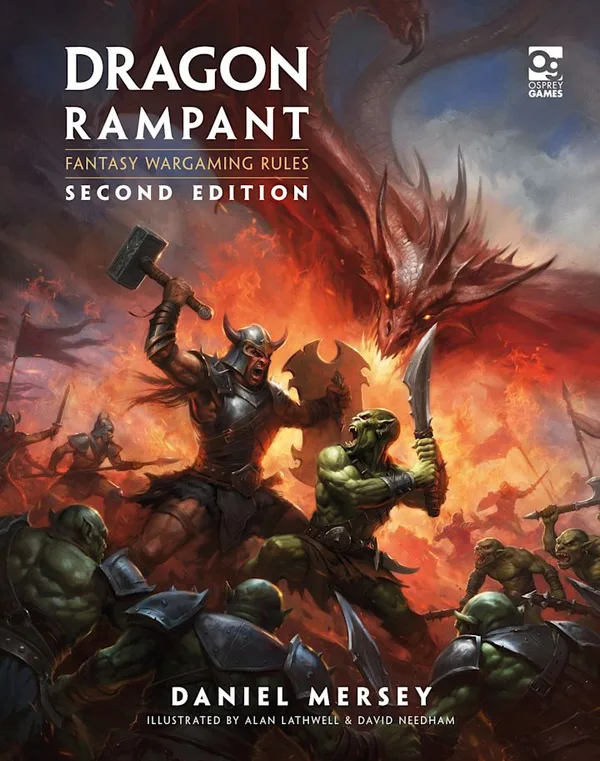
Osprey Games second-edition rulebook cover · Cover source
Miniature-agnostic fantasy warbands fight large skirmishes using revised core rules, expanded magic and unit upgrades. Sample armies and varied scenarios support forces ranging from unruly orcs and undead hosts to barbarians, monsters and sorcerous champions.
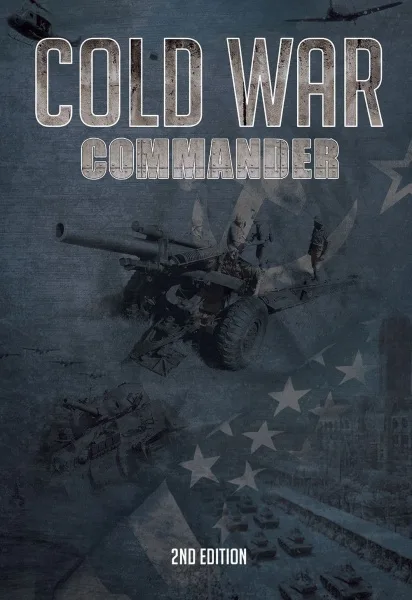
Fast-play rules recreate a hypothetical NATO–Warsaw Pact conflict with armored formations, infantry and supporting weapons in any miniature scale. An action-and-reaction activation system and tactical-advantage cards keep commanders making decisions throughout large and multiplayer battles.
Players command brigades of infantry and cavalry with massed artillery in large historical or fictional Napoleonic battles. The Scharnhorst campaign system creates the battlefield through pre-battle maneuver, while optional unit cards allow play with or without miniatures.
Combined-arms forces fight engagements from the postwar period into the modern era. The second edition supports multiple miniature scales with command rolls, tactical doctrines, artillery, aircraft and anti-tank guided weapons, backed by downloadable army lists.
LandWorld War II · Night raids and covert operations
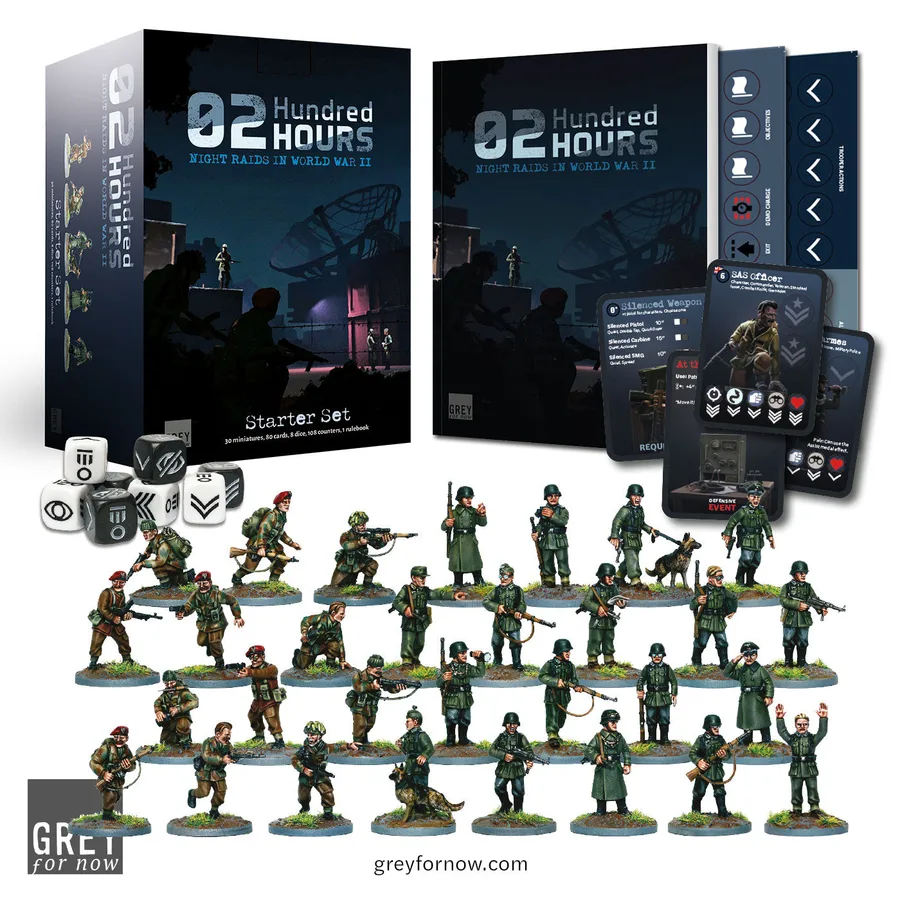
02 Hundred Hours
2022 · Grey For Now Games
Grey For Now Games original starter set (2022) · Cover source
Small forces of commandos, resistance fighters and sentries conduct night raids against guarded objectives. Alert, stealth, patrol routes and sudden ambushes shape missions with roughly five to twenty 28mm figures per side.
Players command divisions, corps or armies while company- and battalion-sized units fight across miles of battlefield. Air power, engineers, reconnaissance, mobile reserves and scenario-building rules put operational choices at the center, with unit cards allowing play with or without miniatures.
LandAmerican Civil War · Large-scale battlefield command
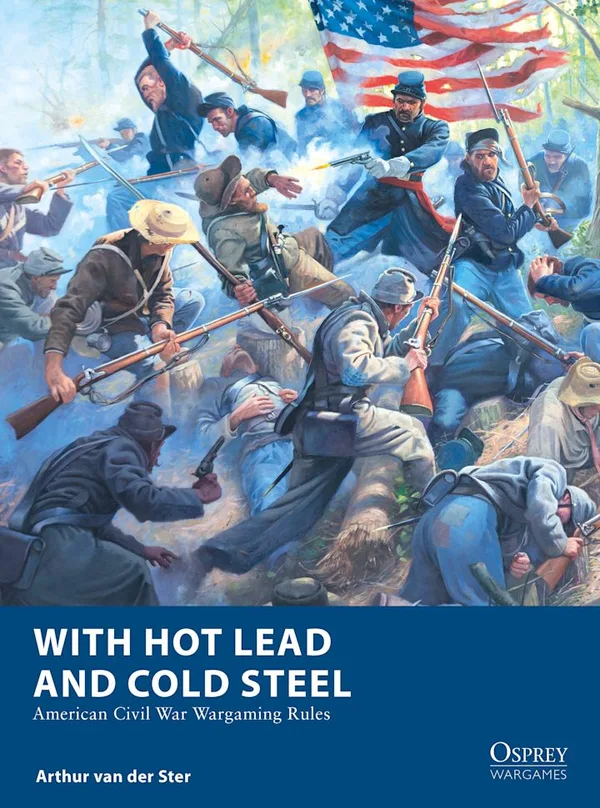
With Hot Lead and Cold Steel
2024 · Osprey Games
Osprey Games first-edition rulebook cover (2024) · Cover source
Brigades and regiments fight large American Civil War battles with command decisions, formation, terrain and battlefield friction emphasized over individual weapon detail. The rules support historical scenarios and original engagements in multiple miniature scales.
Original Lou Zocchi booklet cover (1972) · Cover source
Lou Zocchi's scarce early starship-combat game puts players in command of Enterprise, Klingon and Romulan vessels. Players allocate power to movement, shields, sensors, life support and weapons, then estimate an exact firing bearing and stretch a string from a 360-degree ship template to determine whether the shot crosses its target. Published without Paramount authorization and withdrawn after an objection, it preceded Alien Space Battle Manual and the later Star Fleet Battle Manual; it is distinct from Task Force Games' Star Fleet Battles.
Small forces conduct conventional, special-operations and covert missions using infantry, vehicles, air support, drones, electronic warfare and artificial intelligence. A D10-based momentum system lets elements combine movement, fire, breaching and reactions while awareness, stress, night fighting and campaign rules shape the wider operation.
A player builds a small crew of human, alien and robotic adventurers, travels between colonies and resolves jobs through procedurally generated tabletop battles. Campaign events, injuries, experience, equipment, contacts and ship upgrades connect each miniatures-agnostic skirmish into an evolving solo narrative.
Large ancient armies fight fast-resolution battles on a modest table, with the rules emphasizing the appearance and command of massed formations in small-scale miniatures. Twenty army lists and ten scenarios cover conflicts from the Marian reforms through the height of Imperial Rome, extending from Britannia and Germania to North Africa and the eastern Mediterranean.
Small teams of spies, mercenaries, criminals, hackers and special forces conduct raids, surveillance and extraction missions under a card-driven activation system. Stealth and detection shape the opening moves before a firefight develops, while the rules can also support World War II, Cold War and near-future settings.
Bandits, mercenaries and military teams explore a hazardous Exclusion Zone in fast-playing skirmishes over abandoned artefacts and scarce salvage. Miniatures-agnostic warbands gain weapons and specialisms while campaign progression, dangerous terrain and environmental hazards connect each firefight to a longer struggle for survival.
Second edition (2022) · Published rulebook cover · Cover source
Armies of antiquity fight large battles with flexible miniature basing and terrain cards that shape the battlefield. Historical scenarios, army-building options, and siege rules support games from the Greco-Persian wars through the Roman era; the pictured rulebook is the revised second edition.
Battle of Britain Starter Set (2017) · Publisher-supplied box front · Cover source
Players plan aircraft maneuvers with cards, then move miniature planes and resolve aerial combat. The World War II system models differing aircraft speeds and firepower; the pictured Battle of Britain Starter Set supplies a complete entry point with aircraft, maneuver decks, and playing accessories.
Free online miniature rules for commanding corps and armies in the French Revolutionary and Napoleonic Wars. Regimental and brigade assaults combine volley fire, melee, and unit reactions, with separate command, maneuver, artillery, skirmishing, and panic rules. WTJ supplies combat charts, troop lists, leader ratings, and historical orders of battle, and also offers Republique 5.0 as a beta edition.
The catalog covers commercially released miniature rules, including small-press titles. It is not a claim that every published system has been found; uncertain dates and publishers are left out until checked.
Keep this on your Battleward shelf.
Save it for later, or follow it to see new activity in My Battleward.