From Manassas to Gettysburg, Lincoln changed the leadership of the Union's principal eastern field army again and again. The changes were neither a cure for defeat nor mere political meddling. Each responded to a specific crisis, and each altered what the army could do next.
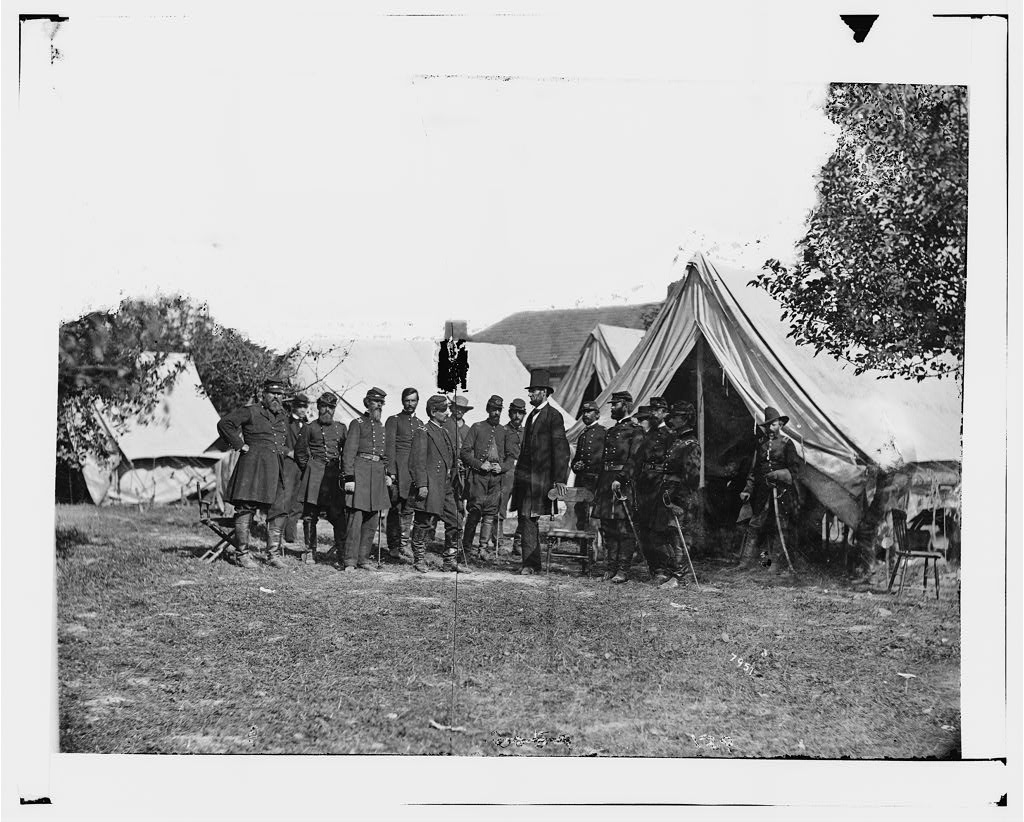
The command changes at a glance
| Period | Commander | Campaign result |
|---|---|---|
| July 1861 | McDowell | First Manassas defeats the initial Union offensive. |
| July 1861–August 1862 | McClellan | Builds the Army of the Potomac; Peninsula advance fails to take Richmond. |
| Summer 1862 | Pope | New Army of Virginia loses at Second Manassas during a difficult concentration. |
| September–November 1862 | McClellan | Returns, stops Lee at Antietam, then is relieved after slow pursuit. |
| November 1862–January 1863 | Burnside | Fredericksburg and the Mud March end his command. |
| January–June 1863 | Hooker | Reorganizes the army; Chancellorsville defeats his offensive. |
| From June 28, 1863 | Meade | Takes over during Lee's invasion and wins at Gettysburg. |
These rows describe the eastern field commands, not a single uninterrupted appointment to one office. Pope led the separate Army of Virginia, and McDowell's first army preceded the mature Army of the Potomac.
The question behind the revolving door
On June 28, 1863, George G. Meade woke to news that he now commanded the Army of the Potomac. Robert E. Lee's army was already in Pennsylvania. Meade had days, not months, to take charge of a vast force whose commanders had served under a succession of chiefs. Three days later the armies met at Gettysburg. That change worked: Meade directed a defensive victory. Yet the same president who appointed him soon lamented that Lee escaped across the Potomac. A general could save a campaign and still disappoint Abraham Lincoln. The standard against which Lincoln measured success was larger than holding a battlefield. [13–16]
From First Manassas in July 1861 through Gettysburg in July 1863, Union command in the eastern theater passed through Irvin McDowell, George B. McClellan, John Pope, McClellan again, Ambrose E. Burnside, Joseph Hooker, and Meade. This is not an exact succession to one identical job: McDowell commanded the first field army before the Army of the Potomac took shape, and Pope led a separate Army of Virginia. The distinctions matter. A change in a general's name could also mean a new army organization, new orders, and a new relationship with Washington. [1–4, 8, 13]
The question is not which man was brave or whether Lincoln should have found a flawless commander sooner. It is what each appointment accomplished and what it cost. Did a new chief restore confidence, improve organization, and force a campaign? Did the change interrupt plans or split responsibility? Was a defeat caused mainly by the man at the top, or by intelligence, subordinates, roads, rivers, and an opponent free to act? The answers differ from one campaign to the next. If we turn the story into a simple sequence of fools followed by a winner, we miss both the army's growing competence and the limits of a president's power to manufacture victory by changing its commander.
What the war was about, and why the East mattered
Secession followed the election of Lincoln in 1860. The central conflict was slavery: its expansion, its political protection, and the future of a republic in which enslavers exercised enormous power. The Confederate states chose separation to preserve that system. The United States initially fought to maintain the Union; emancipation became an explicit federal war measure as the conflict developed. The eastern campaigns cannot be detached from that cause. Armies maneuvered through a society built on slavery, and the meaning of a Union victory changed as enslaved people fled to federal lines and the administration moved toward emancipation. [2, 17]
Virginia made the military problem painfully visible. Washington sat near Confederate territory, and Richmond, the Confederate capital, lay roughly a hundred miles away. A victory in northern Virginia could protect the United States capital, threaten Richmond, and carry political weight far beyond its immediate battlefield result. Yet capturing a capital was not the same as destroying an army or ending a rebellion. Lee could fight, withdraw, and return; a Union general who marched toward Richmond still had to guard Washington, maintain supply, and defeat the forces between him and the city. Lincoln increasingly insisted that the enemy army, rather than a place on the map alone, was the vital object. [2, 3, 7]
This article follows that eastern field army because its commanders changed often and its operations drew unusually direct attention from Lincoln. It is not a complete history of the Union war effort. Union armies and fleets elsewhere secured coastal positions, fought in Tennessee and Mississippi, and eventually took Vicksburg. Their campaigns affected what was possible in Virginia and how a victory in the East would be understood. A reader should keep that larger war in view whenever an eastern commander claims that everything depends on his next movement. [2, 16]
July 1861: McDowell and the rush to Manassas
Irvin McDowell received the job of moving a new Union force against Confederate troops near Manassas. The regiments were inexperienced, enlistments were short, and the machinery for commanding a large volunteer army had barely been assembled. Public and political pressure for action was strong. McDowell understood that his army needed time, but time also helped the Confederate forces strengthen. His plan for July 21 involved a diversion and a turning movement around the Confederate left. On paper it was more sophisticated than the later caricature of a blind charge straight down a road. [1]
The operation exposed how difficult it was to coordinate men new to war. Marches ran late, units crowded roads, and the Confederate army received reinforcements by rail after Joseph E. Johnston slipped away from a separate Union force in the Shenandoah Valley. Union troops initially made progress on Henry Hill. The battle then swung back. Confederate resistance, reinforcements, confusion, and the breakdown of Union control produced a retreat toward Washington. First Manassas was a Confederate victory, but it was not proof that every Union soldier lacked courage or that McDowell alone had created the conditions for defeat. [1]
The result changed expectations. The war would not be ended by one quick push to Richmond. McDowell lost the leading role in the eastern field army, and McClellan came to Washington after small victories in western Virginia. That replacement helped the Union do what the first campaign had shown was necessary: organize a much larger force and prepare it for sustained operations. It also taught a dangerous political lesson. When a campaign failed, changing the commanding general seemed like an immediately available remedy, even when the replacement inherited the same inexperienced institutions and the same difficult geography. [1, 2]
McClellan builds an army—and delays using it
George B. McClellan was an excellent organizer. Under his direction the Army of the Potomac trained, equipped itself, constructed defenses, and developed a strong identity. Soldiers' affection for Little Mac was not a mystery: he made them feel that their lives would not be thrown away casually. This was a real contribution after Manassas. A commander who assembles a working army from an improvised mass has accomplished something important, even if his later campaigns leave historians arguing about his battlefield decisions. [2]
The difficulty was that the same caution that protected the army also delayed the campaign Washington expected. McClellan repeatedly believed Confederate forces stronger than they were and wanted fuller preparation and more troops. Lincoln, who had to consider simultaneous fronts and the defense of the capital, grew frustrated. Their disagreement was strategic as well as personal. McClellan wanted to maneuver toward Richmond with a large, carefully supplied army. Lincoln wanted a military decision soon enough to sustain the Union's war effort and did not accept that every risk could be eliminated before moving. [2, 3]
In November 1861, after the retirement of Winfield Scott, McClellan also became general-in-chief of the United States armies while continuing to command the Army of the Potomac. The arrangement combined broad national responsibility with the work of leading one field army. That did not improve the clarity of command. Lincoln later removed him from the general-in-chief role while leaving him in charge of the eastern army. It is worth separating these jobs when judging the next campaign: McClellan could build and direct his own force, but the federal government had to coordinate every theater. [2]
The Peninsula: an intelligent route, a fragile plan
For the 1862 offensive McClellan proposed moving by water to the Virginia Peninsula between the York and James rivers. The maneuver could bypass the strongest overland defenses and bring a large army toward Richmond. It was a serious operational idea, not a refusal to fight disguised as a plan. Amphibious transport, supply from a coastal base, and a possible advance by the James gave the Union a different way to use its naval strength. Once troops landed near Fort Monroe, however, the plan still depended on roads, rivers, timing, intelligence, and the security of Washington. [2, 3]
Progress was slower than McClellan and Lincoln had hoped. Confederate defenses at Yorktown induced a lengthy siege preparation. The Union army then advanced through Williamsburg toward the outskirts of Richmond. McClellan wanted the forces he believed necessary for a decisive move, while Lincoln and the War Department worried about the capital and Confederate activity in the Shenandoah Valley. Keeping troops away from the Peninsula constrained the campaign. At the same time, McClellan's estimates of enemy numbers were too high, and his operational caution cannot be explained away entirely by the absence of reinforcements. Two real problems existed together. [2, 3]
The Chickahominy River divided the Union army near Richmond. Confederate commander Joseph E. Johnston attacked at Seven Pines at the end of May and was wounded; Robert E. Lee succeeded him. McClellan remained near the capital, but his line was vulnerable and his confidence in his intelligence and supporting forces was low. Lee seized the initiative in the Seven Days' Battles from June 26 to July 1. His attacks were costly and not uniformly well executed. Nevertheless, they disrupted McClellan's advance and drove the Union army to a secure position on the James. Richmond survived. [3]
What the Seven Days did and did not prove
The Peninsula Campaign did not end with the annihilation of the Army of the Potomac. At Malvern Hill Union defenses punished Confederate attacks. The army reached Harrison's Landing with a supply line supported by federal gunboats. Its soldiers had shown they could stand and fight. A new offensive from the James might have been possible under different political and logistical conditions. It is a stretch to declare that McClellan had victory in his hands and deliberately let it go. It is equally a stretch to insist that his retreat was the only defensible response to Lee. [3]
From Lincoln's standpoint, an enormous national investment had reached Richmond's doorstep and then moved away without taking the city or destroying Lee's army. McClellan's demands for more men continued while federal forces elsewhere faced immediate threats. Confidence between president and commander deteriorated. Lincoln and General-in-Chief Henry Halleck decided to withdraw the Army of the Potomac from the Peninsula and use it to support a new force in northern Virginia. That decision would shape the next defeat. The Union tried to exchange a stalled approach for an active one, but moving tens of thousands of soldiers between campaigns was not as simple as moving a marker on a map. [2–4]
The first McClellan command therefore has a mixed result. He had made the army capable of a major operation and brought it close to the Confederate capital. His approach to enemy strength, delays, and handling of the Seven Days limited what that investment achieved. Replacing his campaign design offered a chance to recover initiative. It also introduced a second army commander while the transfer of men, matériel, and authority was still underway. A change of chief might solve a strategic problem and create a coordination problem at the same time. [2–4]
Pope: aggression without a settled command
John Pope, recently successful in the western theater, took command of the new Army of Virginia. His appointment signaled a desire for movement and pressure. Lincoln's government hoped the force could threaten Confederate communications and draw Lee away from Richmond while McClellan's army shifted north. Pope's public manner also contrasted with McClellan's caution. But an aggressive statement was not a supply system, and the new army had to coordinate with commanders and troops whose loyalties, orders, and locations were in flux. [2, 4]
Lee moved faster than the Union concentration. After the immediate pressure on Richmond eased, he sent Stonewall Jackson against Pope and then brought James Longstreet forward. Jackson struck Pope's communications at Manassas Junction and occupied a strong position near the old battlefield. Pope attacked Jackson on August 29 and 30 believing he could defeat him before the Confederate army was fully united. Longstreet's arrival and counterattack on August 30 turned the battle into a severe Union defeat. The retreat brought federal troops back toward Washington. [4]
Second Manassas cannot be reduced to Pope being the wrong personality for the job. He made serious errors in reading the battlefield and in his attacks, while the Union high command struggled to unite separate forces under one plan. Debates over particular subordinates and orders became bitter afterward. McClellan's remaining troops, Pope's existing army, Washington's defense, and the movement of Lee's two wings were all parts of one operational problem. The attempt to replace caution with boldness had not provided coherent control. Pope lost his eastern command, and Lincoln turned again to McClellan. [2, 4]
McClellan returns because the army needs him
The second appointment can look absurd in a quick list: Lincoln restored the man whose Peninsula campaign had just disappointed him. In September 1862, however, Lee was crossing into Maryland and the forces defending Washington needed to be assembled, reassured, and sent after him. McClellan knew the army and was trusted by many of its soldiers. Burnside, a possible alternative, had declined the top job. Lincoln needed immediate cohesion more than he needed to win an argument about the last campaign. Bringing McClellan back helped stabilize the force at a dangerous moment. [2, 4, 8]
The Maryland Campaign then gave McClellan an unusual opportunity. Union soldiers found a copy of Lee's Special Orders 191, which disclosed the division of Confederate forces. This intelligence helped put the Union army in motion through the South Mountain passes and toward Sharpsburg. Intelligence was valuable, but it had an expiration date: Lee could change his dispositions, and a commander had to move men through defended gaps and uncertain terrain. The discovery did not turn the campaign into an easy puzzle whose answer every officer could see at once. [5]
At Antietam on September 17, McClellan attacked Lee's army in a series of bitter fights on the Union right, center, and left. Lee held through the day and withdrew to Virginia afterward. The battle cost roughly 22,700 casualties on both sides in the National Park Service tally. The Confederate invasion had been stopped; that was a genuine strategic success. Yet Lee's army remained intact. The Union's attacks were not concentrated into the single crushing blow Lincoln hoped for, and McClellan did not follow the retreat with a decisive pursuit. The same commander had given the Union a badly needed defense and left the government dissatisfied with what came next. [5, 6]
A battlefield result becomes a political turning point
Antietam mattered beyond the army's immediate position. Lincoln issued the preliminary Emancipation Proclamation on September 22, announcing that on January 1, 1863, enslaved people in areas still in rebellion would be declared free. The measure did not free every enslaved person at once, and its legal reach had limits, but it changed the declared aims and conduct of the war. The federal army became an instrument in a struggle explicitly tied to emancipation. Enslaved people themselves were already acting on the war's openings; the proclamation gave that process new federal authority. [17]
Lincoln's frustration with McClellan after Antietam was therefore not a failure to notice that Lee had retreated. He wanted the army to exploit the result. In an October letter he pressed McClellan on movement, supplies, and the geography of a new advance. McClellan answered with concerns about readiness and the condition of horses and men. Some were material, not invented. The president nevertheless judged that the army was not moving quickly enough against an opponent able to recover. This was a recurring strategic difference: McClellan measured how safe his next operation would be; Lincoln measured the opportunity lost while waiting. [2, 7, 8]
In November Lincoln relieved McClellan and placed Burnside in command. The decision had a plausible purpose. An army that had stopped an invasion needed to keep pressure on Lee, and the president no longer trusted McClellan to do it at a useful pace. The risk was plain too: McClellan's popularity among his soldiers did not automatically transfer to his successor. Changing commanders could give the army new orders immediately, but trust, staff habits, and knowledge of the force took longer to rebuild. [2, 8]
Burnside and the road to Fredericksburg
Ambrose Burnside had won respect for operations along the North Carolina coast. He had also declined the Army of the Potomac command more than once. He did not arrive claiming that he had solved every problem his predecessor could not. His plan to move quickly toward Fredericksburg and then Richmond had operational logic: get ahead of Lee, cross the Rappahannock, and exploit the initiative. The key was timing. The army reached the river, but the necessary pontoon bridges did not arrive when needed. Lee used the delay to occupy strong ground on the far bank. [8, 9]
On December 13, 1862, Burnside attacked. Union troops made a brief penetration on the Confederate right, where Meade's division fought, but support and exploitation failed. Repeated assaults against the defended heights behind Fredericksburg inflicted terrible losses. The Union army recrossed the river. The National Park Service battle summary gives about 12,650 Union and 5,300 Confederate casualties; exact returns vary by source. This was not the result Lincoln had sought when he replaced a cautious general with one willing to move. The new commander had acted, but the timing, crossing, and attack had not produced a workable battle. [9]
Burnside's failure is sometimes told as a morality play in which a man who knew he was unfit accepted the job and then ordered a pointless slaughter. That story is too convenient. His earlier North Carolina success explains why he was considered, and his initial maneuver had a sound premise. He must still be held responsible for persisting with attacks against a formidable position after the opportunity for a quick crossing had vanished. The pontoon delay mattered, but it did not order the final assaults. A leader's job is to change the plan when its indispensable condition is gone. [8, 9]
The Mud March and the price of lost confidence
Burnside tried to recover with another movement across the Rappahannock in January 1863. Rain and mud wrecked the operation before a major battle began. Roads and transport could defeat an army without an enemy charge. The episode became known as the Mud March and worsened the command crisis. Senior officers criticized Burnside; he wanted some removed or disciplined. An army that had endured Fredericksburg now faced open distrust near the top. The president could retain Burnside and risk deepening the internal conflict, or replace him and impose another period of adjustment. [8, 10, 11]
Lincoln chose Joseph Hooker. In his letter of January 26 he acknowledged Hooker's ability and expressed concern about his part in undermining the previous commander. The document is unusually revealing. Lincoln did not imagine that an appointment erased factionalism. He warned that a habit of criticizing the chief might turn on Hooker himself. The commander needed to win, certainly, but he also needed to make the army obey a shared authority again. Hooker's rise thus offered a fresh start and carried forward the cost of the way the previous chief had been displaced. [10]
This was perhaps the clearest example of a necessary change that carried a penalty. Burnside's position had become difficult to sustain after defeat and quarrels. Hooker brought energy, administrative ability, and a plan to restore the army. But no president could simply reset the officers' relationships with a signed order. The Army of the Potomac contained men who had served under McClellan, blamed Burnside, distrusted Hooker, or aspired to the same job. Command was a social and political structure as well as a chain of ranks on paper. [8, 10, 11]
Hooker repairs the machine
Hooker's winter work deserves more credit than his defeat at Chancellorsville often allows. He improved the army's administration, food, leave, and morale. He strengthened intelligence through the Bureau of Military Information and reorganized the cavalry into a more coherent arm. His soldiers entered the spring in better condition and with better information about Lee than the dispirited force he had inherited. Those changes did not guarantee victory, but they remained assets after Hooker left. A general's value cannot be measured only by the last battle he commanded. [11, 18]
His campaign design was ambitious. While a portion of the army held Lee's attention near Fredericksburg, the main force would move upstream, cross the rivers, and appear on the Confederate flank and rear near Chancellorsville. Lee might retreat, be forced out of his defenses, or have to fight at a disadvantage. Hooker's intelligence and initial maneuver brought the Union into a promising position. For a moment, replacing Burnside seemed to have accomplished everything Lincoln had wanted: a restored army and an offensive that did not simply repeat the frontal attacks at Fredericksburg. [11, 12]
Then the campaign changed. Hooker pulled his advancing troops back toward a defensive position as Lee came forward. Lee accepted extreme risks, divided his smaller army, and sent Jackson around the Union right. Jackson's flank attack on May 2 shattered the exposed Eleventh Corps. Fighting continued, and Hooker still had substantial forces; the collapse of one wing did not magically eliminate his entire army. But command decisions, Confederate pressure, and the failure to coordinate the Union forces near Fredericksburg brought a retreat across the Rappahannock. Chancellorsville was a Confederate victory and a Union failure to turn a strong operational opening into a result. [12]
Chancellorsville was more than one bad hour
The popular explanation says Hooker lost his nerve and Lee won by genius. Those phrases name something real about initiative, but they are too small for the battle. Hooker had shaped a sound opening and then surrendered room to maneuver. Lee's division of his army could have been punished had the Union exploited the separation, but his subordinates marched and fought with purpose. Federal corps commanders saw only portions of the field, and orders did not always connect their actions. The Union's numerical advantage could not be brought to bear everywhere at once. [12]
Jackson was mortally wounded by Confederate fire after his flank attack, a severe cost to Lee. Confederate casualties were high. Hooker's army was not destroyed, and its improved organization did not vanish with the defeat. These points matter because they explain why Lee's next move was a risk rather than a march by an invincible army. He chose to carry the war into Pennsylvania while the Union still held Washington, substantial forces, and the ability to follow him. Chancellorsville gave Lee the initiative and confidence, not a guarantee of another victory. [12–14]
Lincoln kept Hooker in command during the first stage of the pursuit north. The next replacement did not occur immediately after the battlefield defeat. Tension over strategy, authority, and the disposition of troops at Harpers Ferry grew as Lee moved into the North. Hooker requested to be relieved; Lincoln accepted the change and appointed Meade on June 28. The timing exposed the Union to one of command's greatest hazards: a new chief had to understand a moving army and an enemy invasion at the same moment. [2, 13]
Meade inherits a campaign already in motion
Meade was an experienced corps commander, not a stranger arriving from outside the Army of the Potomac. That reduced the disruption. He knew its senior officers and many of its strengths, although knowing an army as a corps commander is not the same as controlling all of it while it marches through Maryland and Pennsylvania. He initially considered a defensive position along Pipe Creek. Meanwhile, forward Union elements moving toward Gettysburg encountered Confederate troops on July 1. The battle began before the new commander could arrange every circumstance to his liking. [13, 14]
On July 1 Union troops under John F. Reynolds and other leaders fought a costly delaying action west and north of Gettysburg. Reynolds was killed. The defenders fell back through town to the high ground of Cemetery Hill and Culp's Hill. Meade sent Winfield Scott Hancock to assess the position and concentrated the army there. On July 2 Lee attacked both Union flanks. The struggle at places such as Little Round Top, the Wheatfield, and Culp's Hill involved local initiative, mistakes, and reinforcement decisions beneath Meade's overall command. A newly appointed commander was relying on an existing army of officers to execute a battle already underway. [13, 14]
On July 3 the Union center endured the assault remembered as Pickett's Charge. Confederate attackers crossed open ground under artillery and small-arms fire and were repulsed. Meade had not won by displaying an entirely new style of warfare. He had held the army together, concentrated it at a strong position, listened to his subordinates, and made the defensive battle work. Hooker's reorganization and the soldiers' accumulated experience remained part of that victory. So did Lee's decisions to attack. The claim that a new appointment alone won Gettysburg is as misleading as the claim that the previous commanders contributed nothing to the army that fought there. [13, 14, 18]
Victory and the escape at the Potomac
Lee began withdrawing on July 4. Rain-swollen water and damage to a pontoon crossing delayed him near Williamsport. Lincoln and Halleck pressed for a decisive blow before the Confederate army could return to Virginia. Meade pursued and examined Lee's defensive line. His own army had fought three days, suffered heavy losses, and needed to move through difficult weather with uncertain knowledge of the enemy's position. Lee's army was battered but not a helpless crowd on an open road. Meade did not launch the assault Lincoln wanted before the Confederates crossed. [15, 16, 19]
Lincoln's disappointment was genuine. In a July 14 letter to Meade that he did not send, he judged Lee's escape a grave missed opportunity and imagined that destroying the Confederate army could have shortened the war. The letter is evidence of Lincoln's thinking, not proof that an assault would have succeeded or ended the conflict. He could see the strategic value of trapping Lee; Meade had to decide whether the ground and his exhausted force offered a reasonable attack. The tension between those two vantage points had not disappeared merely because the Union had finally won a great eastern battle. [15, 16]
Lincoln did not remove Meade. That restraint is part of the story of changing generals. If every failure to complete a victory triggered dismissal, the army might never keep a commander long enough to use what it had learned. Meade continued to command the Army of the Potomac, including when Ulysses S. Grant came east in 1864 to direct the wider Union war effort. Gettysburg had checked Lee's northern invasion and restored Union confidence; Vicksburg fell in the same week. Neither event ended the war in 1863. The United States had won important advantages, but its eastern army still faced the work of defeating Lee in Virginia. [2, 13–16]
Did the changes help or hinder?
McDowell's replacement helped because the Union needed to build an army after an inexperienced first campaign. McClellan delivered that organization and a campaign that reached Richmond's outskirts, but his delays and reading of Confederate strength limited its result. Pope supplied offensive intent without a settled, unified command and suffered a major defeat. McClellan's return helped restore cohesion and stop Lee in Maryland, yet his failure to exploit that result convinced Lincoln to change again. Burnside moved rapidly but failed to adapt after the Fredericksburg crossing lost its timing. Hooker restored morale and improved the army's machinery, then lost a promising campaign. Meade took over amid invasion and won at Gettysburg. [1–14]
That sequence is not a scorecard with each man assigned one permanent adjective. Every appointment should be tested against three questions: What problem was Lincoln trying to solve? What did the new commander actually change? What did the transition cost? McClellan's first appointment answered a training problem; his second answered an immediate cohesion problem. Pope's creation answered a strategic impasse but aggravated coordination difficulties. Hooker's appointment answered a morale crisis and left durable improvements despite defeat. Meade's appointment placed a capable commander over an army that could already fight well. [2, 4, 8, 11, 13]
Lincoln learned too. He had to weigh defense of Washington, pressure on Richmond, destruction of Lee's army, public confidence, emancipation, and other theaters. A president could appoint and dismiss, but could not issue a field order that abolished terrain, weather, enemy choices, or the army's internal culture. His frustration with slow pursuit was often strategically perceptive. It did not follow that a faster assault was always possible. The hard truth is that commander selection mattered enormously and never operated alone. [2, 7, 15–17]
A campaign game built around command
A tabletop treatment should resist a simple rule that gives McClellan a permanent hesitation penalty, Pope an aggression bonus, and Hooker a failure roll. That turns people into caricatures and makes the outcome feel prewritten. Instead, put the player in Lincoln's position across several campaigns. Give each candidate a known strength and a genuine liability, and let the army retain or lose some cohesion when its commander changes. The player should understand why the appointment is attractive before discovering its price. [2, 8, 10, 13]
Use three linked tracks: readiness, trust, and strategic time. McClellan can improve readiness and trust among soldiers, but demands time and resources before committing. Pope can seize initiative if separate forces coordinate; if they do not, his attack exposes gaps. Burnside can move quickly if bridging equipment arrives; delay changes the ground and should force a fresh decision. Hooker can rebuild cavalry and intelligence and choose a wide maneuver, but his subordinates must carry out dispersed orders. Meade can inherit those improvements, yet must concentrate an army during an invasion before he knows exactly where Lee will fight. [1–14, 18]
The Confederate player should not be a passive target. Lee can threaten Washington's approaches, defend Richmond, shift troops by rail, split his army at risk, or invade Maryland and Pennsylvania. A Union victory condition cannot consist solely of occupying a capital. Award political and military results separately: protect Washington, preserve the army, hold allies and public support, advance emancipation after the proper point in the war, and damage Lee's ability to campaign. Changing a general might improve one measure and worsen another. The strongest scenario begins with a choice under uncertainty, not with the historical defeat already built into a die roll. [2–6, 12–17]
Conclusion
Changing generals helped the Union when it matched a commander to an immediate need: McClellan could organize and later steady the army; Hooker could restore it after Fredericksburg; Meade could command it through an invasion. It hindered the Union when an appointment was expected to cure structural problems by personality alone, when separate armies could not be joined in time, or when a new chief inherited distrust along with his orders. Repeated changes imposed real costs, yet keeping an ineffective arrangement also cost lives and opportunities. Lincoln had no simple rule for knowing which cost would be greater. [1–14]
By Gettysburg the Army of the Potomac was more experienced, better organized, and able to defeat Lee in a major battle. It was also an army made by several commanders, including men who had failed. The victory did not settle the argument between preserving a force and destroying an opponent, and Lee's escape showed why Lincoln remained dissatisfied. The deeper lesson of these early campaigns is that generals matter most through the institutions and decisions they shape. Replacing a name at headquarters can change a campaign. It cannot by itself turn a difficult war into an easy one. [13–16, 18]
Sources and method
Bracketed numbers refer to the works below. The article uses National Park Service campaign histories, Lincoln's correspondence, and the National Archives to separate contemporary decisions from later judgments. Several conclusions about command costs and possible alternatives are analysis, not claims that a source can prove mechanically. Casualty totals and the exact promise of a pursuit are uncertain; the article avoids treating a missed opportunity as a guaranteed victory.
- [1] National Park Service, First Manassas ↗
- [2] Library of Congress, Lincoln as Commander in Chief ↗
- [3] National Park Service, Seven Days' Battles and the Peninsula Campaign ↗
- [4] National Park Service, Second Manassas ↗
- [5] National Park Service, Special Orders 191 and the Maryland Campaign ↗
- [6] National Park Service, Antietam battle summary ↗
- [7] Lincoln to McClellan, October 13, 1862, House Divided/Dickinson College ↗
- [8] National Park Service, How Burnside Got Command ↗
- [9] National Park Service, Fredericksburg battle summary ↗
- [10] Library of Congress, Lincoln's January 26, 1863 letter appointing Hooker ↗
- [11] National Park Service, Hooker Takes Command and the Road to Chancellorsville ↗
- [12] National Park Service, Chancellorsville battle history ↗
- [13] National Park Service, Meade and Lee at Gettysburg ↗
- [14] National Park Service, Gettysburg overview and retreat to Williamsport ↗
- [15] Library of Congress, Lincoln's unsent July 14, 1863 letter to Meade ↗
- [16] National Archives, Lincoln's July 1863 telegram to Halleck ↗
- [17] National Archives, Emancipation Proclamation ↗
- [18] National Park Service, Brandy Station and Hooker's cavalry reorganization ↗
- [19] National Park Service, Williamsport and Lee's retreat after Gettysburg ↗
Conversation
Reader comments
Discuss the article and keep the conversation civil.
Loading comments…